
In my previous posts, I delved into the distinct traits of talented architects, particularly their knack for toggling between the analytical and creative aspects of their minds. In this third post, I’ll share an encounter with another architect whose exceptional skill involved mentally manipulating objects.
Understanding spatial relationships is a fundamental skill for architects. While many can interpret 2D plans and some can sketch in 3D, few can effortlessly sketch an object from various angles, and fewer can do it rapidly.
I once met an architect who could take a detail, visualize it from any viewpoint, including a 45-degree angle, and swiftly rotate it mentally. This talent was immensely beneficial for me and other young architects striving to comprehend how elements fit together.
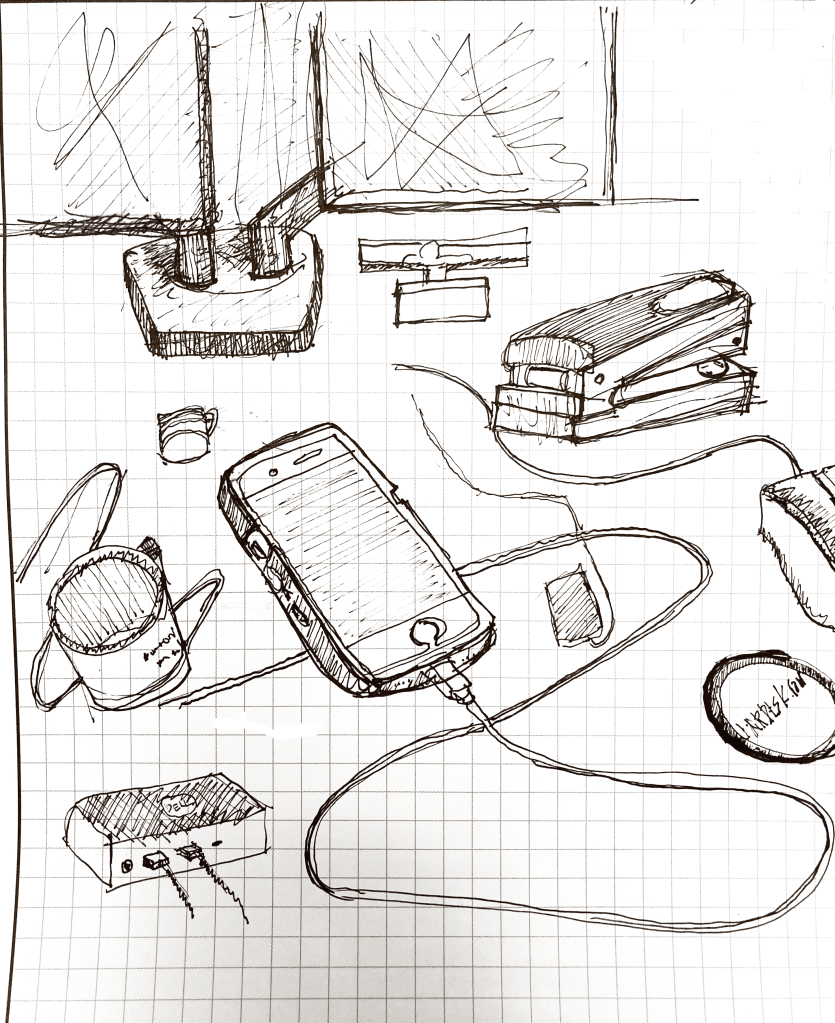
Lately, I’ve been honing my own abilities in this area, evident in the sketches below. Contrary to popular advice of practicing perspective drawings, I’ve found that this method primarily engages the left brain rather than enhancing spatial visualization. As I evolve in my architectural career, I’m realizing the significance of not just repetitive practice but also cultivating instinctive observational connections.
How to Practice:
First off, don’t cheat! Take an object, any object. In 30 seconds or less, sketch the object. Then Practice rotating it mentally Start by using your non-dominant hand. Remember – these are not supposed to be masterpieces. You’re trying to learn visually communicate in a short enough time that under pressure, you can convey an idea.
1.) 30 Second – Left Hand
2.) 30 Second – RIght Hand
3.) 1 Minute – Right hand


 JORDAN SPUCK